Showing posts with label Beal Ropes. Show all posts

4/24/2017

Chulilla Spain Travel Tips

IMG_1153.JPG

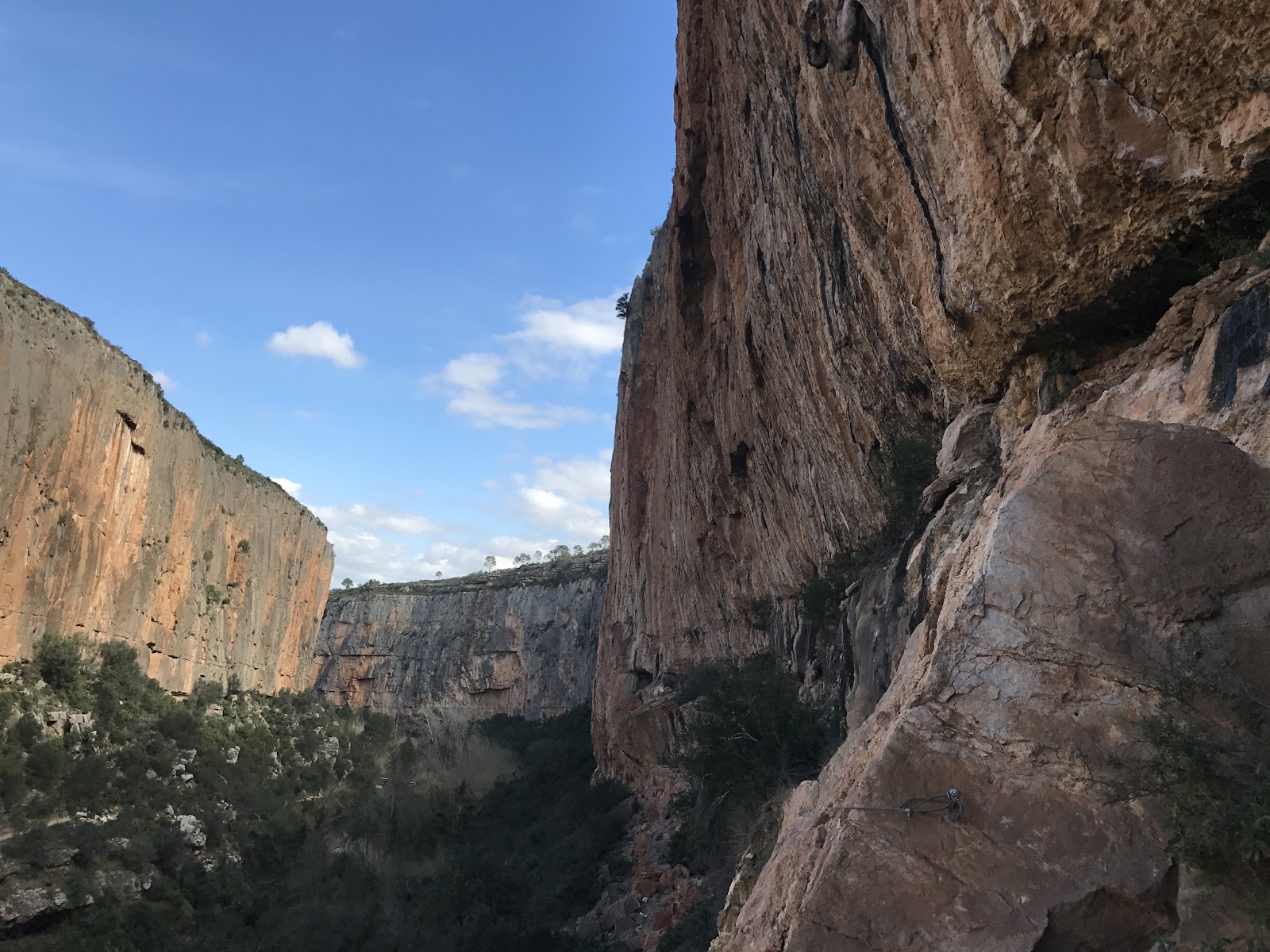
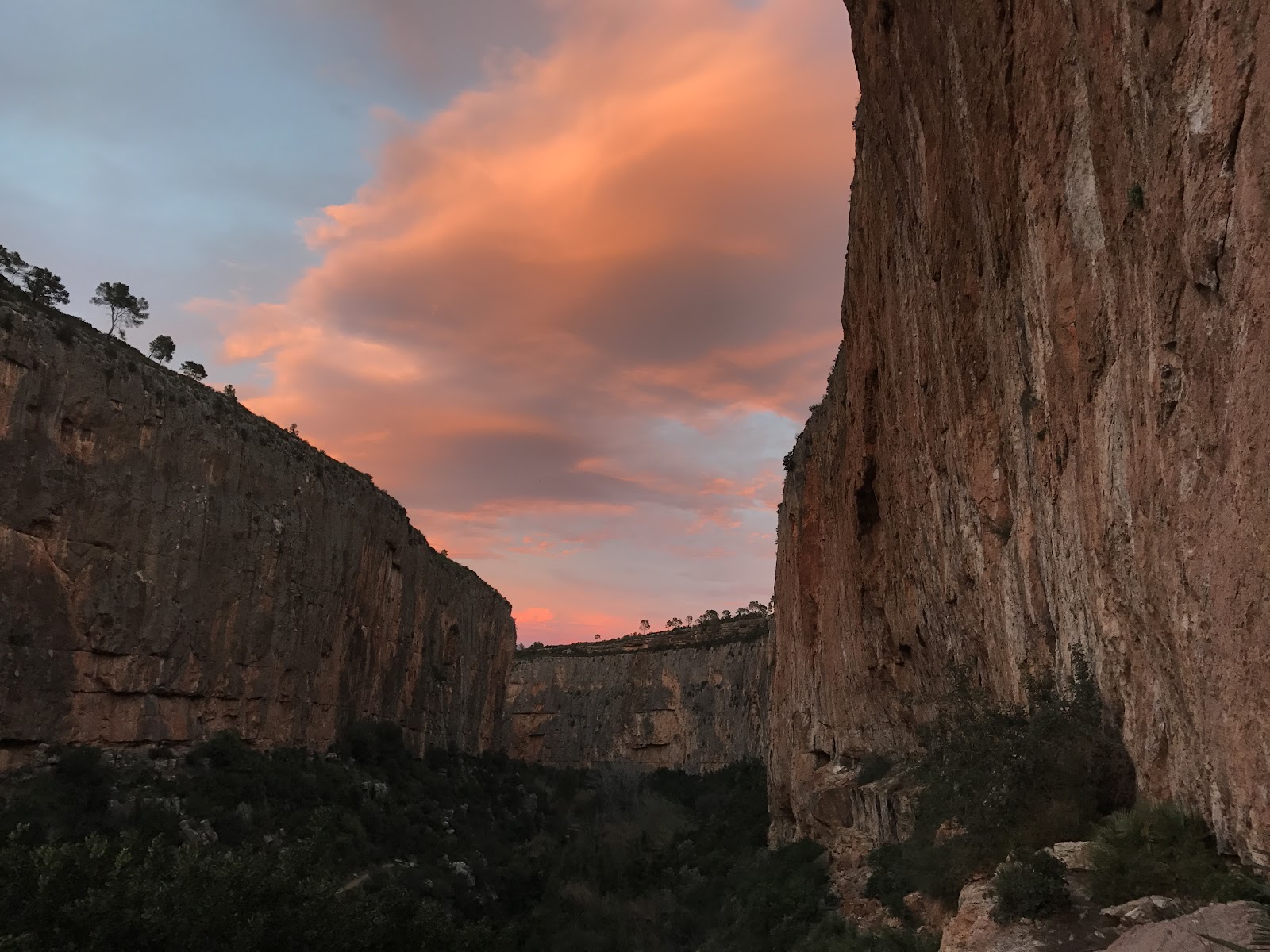
Beal Athlete Anne Struble recently returned from a climbing trip to Chulilla, Spain, a small town near the eastern coast of the country. Here are her tips and suggestions for planning your own trip to Chulilla and getting the most out of your time there.

Getting There
Probably the easiest and most direct way to get to Chulilla is to fly to Valencia. It is about 40 min from Chulilla to the Valencia airport. It is also possible to fly into either Madrid or Barcelona and drive from those cities, both of which are under 4 hours away.

Arriving
If you are staying in the village of Chulilla itself, one important thing to note is that while cars are “allowed” on the side streets, most of them are extremely narrow, steep and winding and you may end up in a dead end forcing you to go uphill in reverse in the dark. To get to most locations in town, visitors leave their cars in the large public lot on the North end of town.
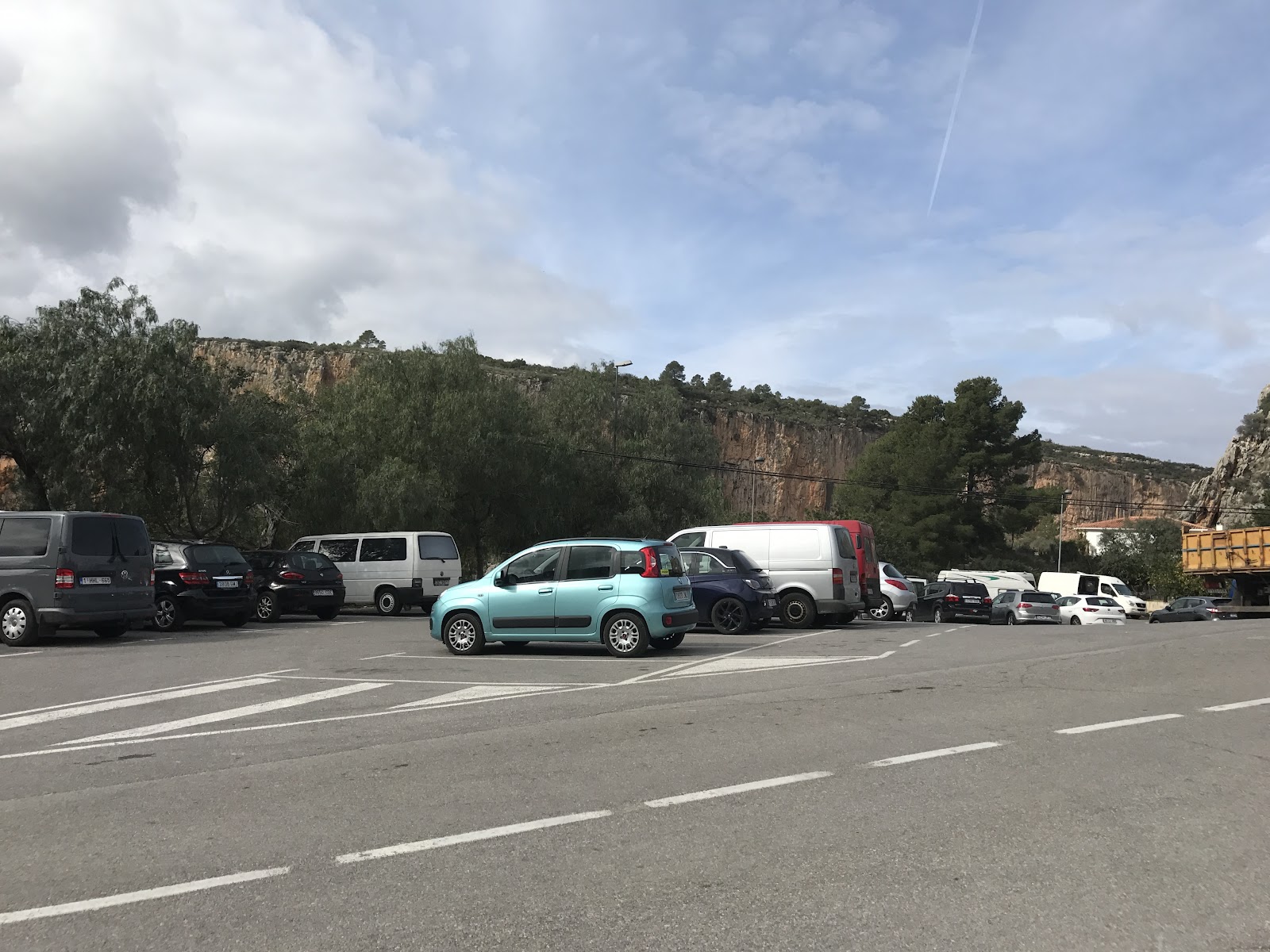
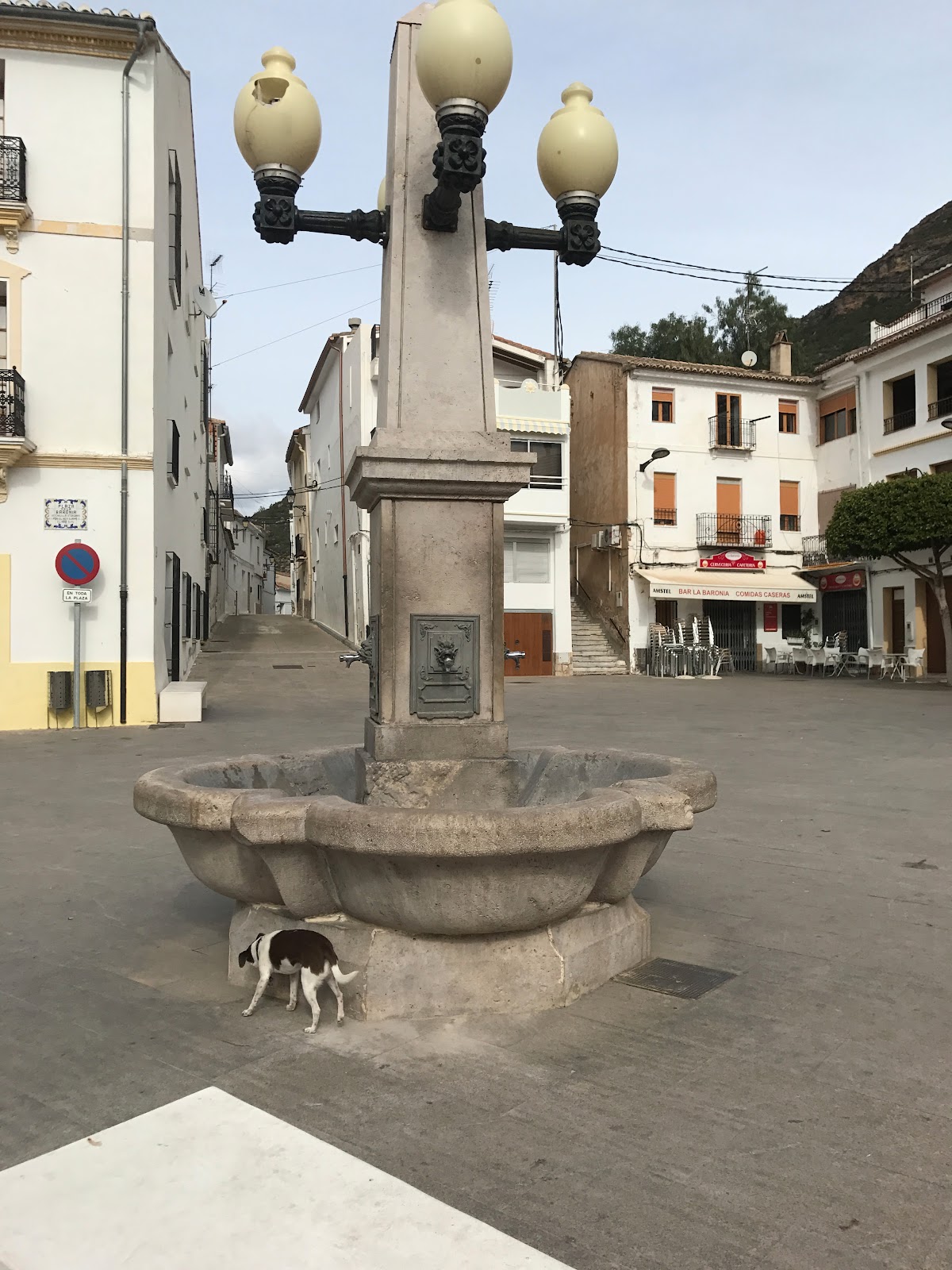
It is also possible to leave your car for short periods of time in the main plaza for loading/unloading/ purposes.



Rental Cars
I usually just use Kayak to find my rental cars and go with whatever is cheapest. Gold Car is usually a good cheap option. They have a super coverage that will theoretically make your life easy if you have any sort of damage to the car or need any roadside assistance. However, you will have to pay quite a bit more for it. Additionally, if you don’t get the super coverage, when you arrive to pick up your car they might give you a really hard upsale.


Lodging
Airbnb is probably your best bet for finding lodging. Chulilla is pretty touristy and there are many options. There are a couple of B&Bs that you might also be able to get dinner at and there are a large number of apartments with full kitchens (and often a washing machine as well). Chulilla is very cute, scenic and convenient but it also works to stay in La Ermita (very close only around 1-2km), Losa del Obispo (only a 5-10 min drive to the climbing parking), or Villar del Arzobispo (a bit further, but it is bigger with a full grocery store and some restaurants).


Shopping
The little stores in Chulilla actually have an impressively wide selection given their size, so it’s not actually necessary to go to a bigger grocery store, but depending upon how much cooking you plan to do you still might want to visit one.  Paniza which is right on Chulilla’s center square has daily fresh bread, empanadas and other treats. The woman who works there is very friendly and you can also get a wide variety of other items. If you venture a bit further from the town center there is another bakery and other stores which offer meats and cheeses. There is also a weekly market on Sundays which has a larger range of fresh produce and some snack items.


Restaurants
Goscanos - the climber’s hangout and offers breakfast and dinner, but is often closed in the middle of the day. They are very friendly and offer reasonable prices and good food.
Restaurante Hoces Del Turia - A nice little restaurant right on the main drag through town. You can also just get a drink or coffee.
There are also other restaurants around town, but I didn’t sample any of them. The best restaurants that I experienced were in Valencia on rest days (see the rest days section).


Climbing
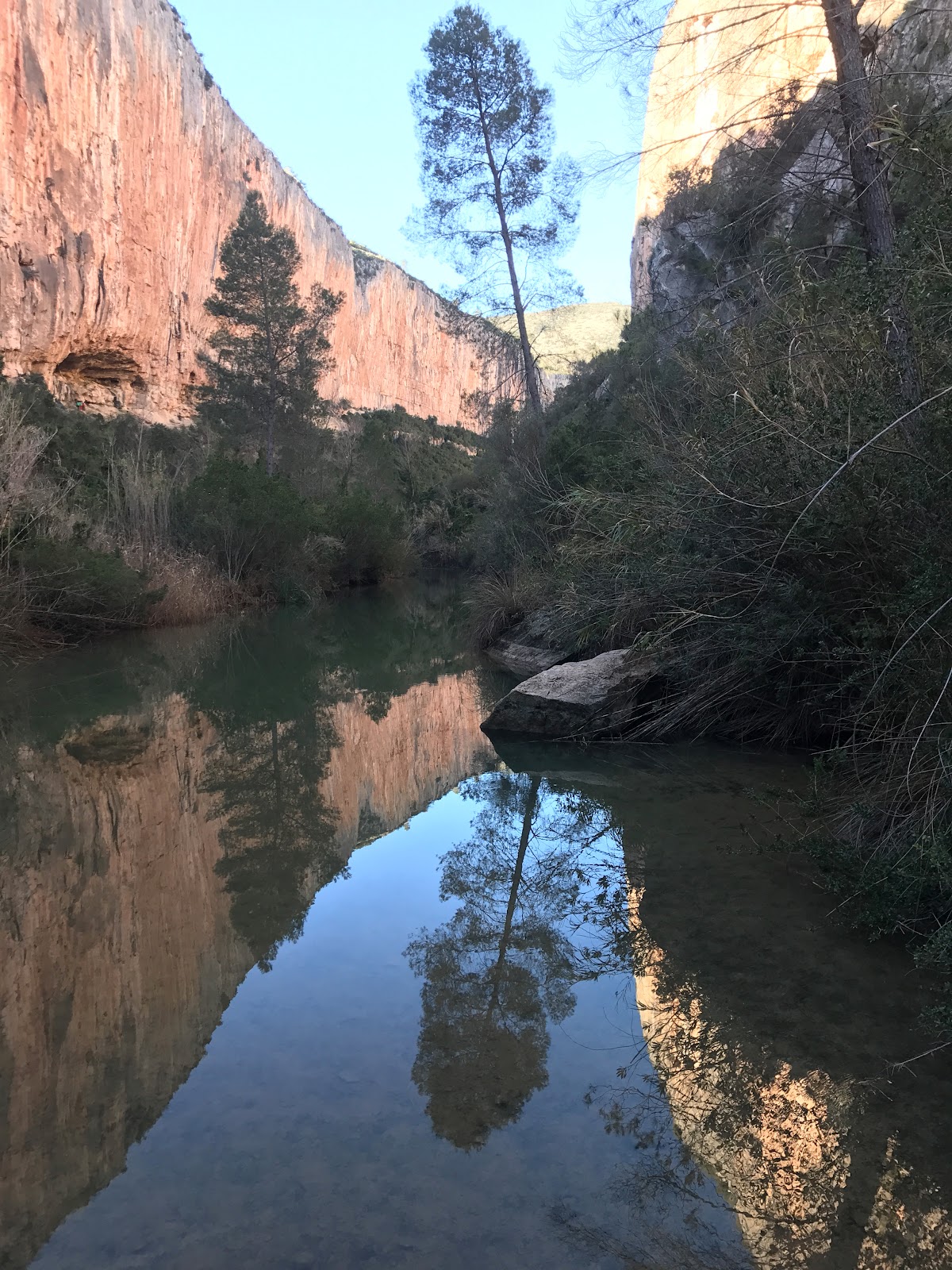


The guidebook can be picked up at the Bar El Canton, or the tobacco shop just next door to it, both are located right on the center square. It’s also likely that Goscano’s sells them. For gear, you could probably get away with a 70m rope, but I’d recommend bringing a longer one. There are a few routes that an 80m is necessary for, but in general it will just make your life easier. For draws, I’d recommend bringing 25, or 40 if you want to leave draws on anything for more than a day. Most routes are between 12 and 16 bolts (plus anchors), but there are the occasional longer (and less run out) ones that might need 20 or 22.

The best areas to climb at will really be dependent on the temps and what grades you are looking for.

For shady climbing I’d hit these areas first:
5.11s: Oasis, Chorreras and Master
5.12s: Chorreras, Oasis, Algarrobo (but stay away from the one star 7b+s at Algarabbo)
5.13s: Balconcito, Algarrobo, Pared Blanca, El Balcon, Chorreras

For sunny climbing:
Pared De Enfrente
For the 5.13s check out the El Ramellar sector for sure. It also goes into the shade in the afternoon and is good enough that it is worth checking out even if it’s a bit warmer.


There is also a climbing gear shop in Chulilla, where there was a decent selection of gear and chalk available.


Rest Days


For rest days, visiting Valencia and eating Paella was our favorite activity. If you just want Paella, I’d recommend Yuso. It’s right in the old town area which is great to explore after a huge satisfying meal. Our favorite restaurant, which also had fantastic paella, but other dishes as well, was Navarro, wonderful food and service. It’s an especially good place to go if you don’t speak much Spanish as they will explain their menu in English and make recommendations. They really want you to enjoy your visit.
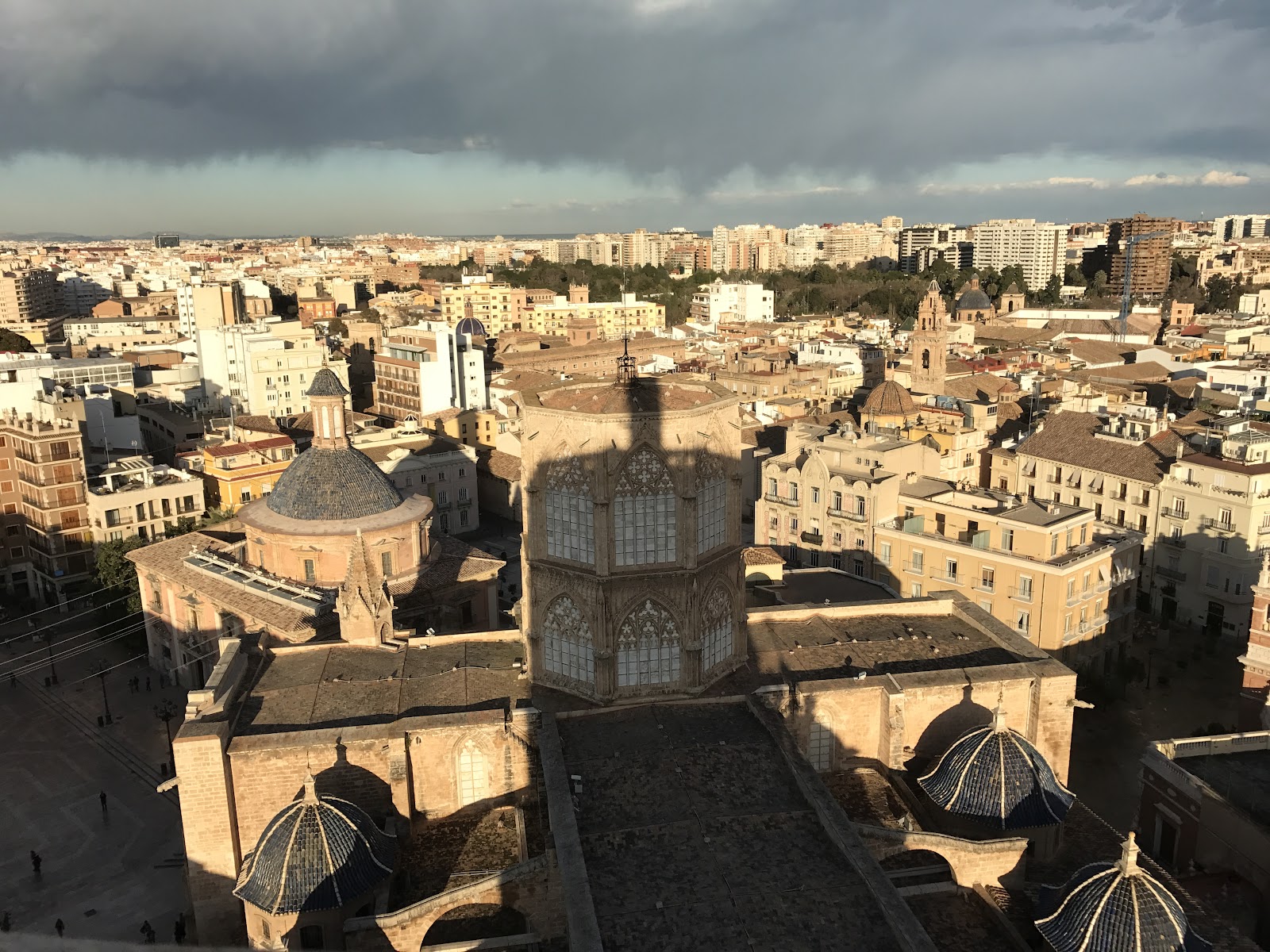

We just enjoyed wandering around the old town and seeing the sites, but the Valencia Cathedral is definitely worth a visit. In addition to seeing the interior of the cathedral and walking through the small museum inside, I’d recommend climbing to the top of tower, which on a clear day will give you a great view of the area.


The beach on the northside of Valencia is also quite scenic with a long boardwalk with restaurants, cafes and ice cream.


There are also many great trails around Chulilla for hiking or trail running.


_________

Like what you read? Share it with a friend.

11/16/2016

Ice Climbing in the Beartooths: November 2016

Alan Rousseau at the belay of Pitch 5 of Ice Dragons.
The Fall of 2016 will go in the books as one of the warmest and driest on record for the intermountain west.  Which for some user groups has been preferable:  Mountain bikers, rock climbers, and trail runners have been shocked about the ability to still get up high and find dry conditions into mid-November.  It has, however, left the ice climbing community pouring over photos, forums, and searching long range forecasts for somewhere within a days drive that has below freezing temps.  Around the Salt Lake area one climber, Nathan Smith, is more vigilant than the rest.  When I got a message from Nathan suggesting heading to the Beartooth’s (a remote range in Montana) to climb an ice line, of course I was interested. 
East Rosebud Lake. The trail starts on the left-hand side of the photo and winds it’s way up to the ice line on the far left.

The Beartooth range is one that is generally kept quiet, people seem to keep information close to the chest.  I had heard of it as this kind of mystical place, reserved for the hard, with flurries of development of long routes in rugged terrain.  Which of course added to the appeal, but makes finding information regarding our planned route, Ice Dragons, not all that easy.  Fortunately, Nathan spoke to someone that had recently climbed the route.  However, we still had a wide range of ambiguity regarding technical difficulty.  One guidebook suggested a grade of M6 WI4, while one trip report suggested WI3, lengths of the climb also varied from 1,000’ to 1,500’.  Either way we were interested in climbing something frozen so we packed up the car and started the nine-hour drive to the East Rosebud Trailhead.  Arriving with a couple hours of light we caught a view of Ice Dragons:  A stunning ribbon of ice splitting the large north face, which forms the shoulder of Mount Inabit.  Our binoculars confirmed that the line was very much in.  


Alan in the “five-mile basin” nearing the cirque holding Ice Dragons.

We began to read through approach information, and found two viable options.  The first was less distance overall, but more mileage through unstable scree and talus fields.  We opted for a second option that had a bit more mileage but less off-trail time.  After plotting some waypoints into our maps we set off into grizzly country at 4 am, hoping our big four legged friends were deep in a winter slumber already.  The first six miles of trail flew by in under two hours.  We found ourselves under a large rock face known as “the Bears Face” from here we located a deep slot, filled with loose rock where we would gain 1300’ of elevation.  It was classic one-step-forward-two-steps-back terrain, and was pretty time consuming.  Eventually we popped out on the pleasant treed shoulder of Inabit and then dropped down and contoured into the talus filled “five-mile basin” where Ice Dragons can be found.
Navigating the talus leading up to Ice Dragons, the largest ice flow in the center of the photo.

We arrived at the foot of the route in five hours.  We were told that the ice would get fatter and fatter with an Indian summer, but were still surprised at how much ice was there compared to conditions the first ascent party found.  Instead of looking at a pitch of primarily rock, we were looking at a pitch of WI3 with maybe a move or two on the rock.  
Alan Rousseau on the first pitch of Ice Dragons.

The climb for us was mostly rambling WI3 and all pitches were around 60 meters in length.  The ice was in great condition, not quite plastic but the majority was one hit sticks.  The position and nature of the climb, up the obvious weakness in the wall, gave it a distinctly alpine feel.  After 1,300’ of climbing we hit the plateau of Mount Inabit.  We rappelled back down the route building two rock anchors and the rest were v-threads. 
Alan Rousseau on the third pitch of Ice Dragons.

Looking back just a few miles to summer conditions lower on the trail.
Nathan Smith on the fourth pitch of Ice Dragons

Alan at the top of the ice climbing. 300’ of snow and mixed lead to the plateau from here.

Alan punching his way up.

For the descent we decided to take the more direct option that involved more off trail time.  It also involved some undesirable scree fields but was not nearly as steep as the notch we climbed through that morning.  The descent took around 3 hours from “five mile basin” to the car.  We arrived at the car at 5:30 pm and had to turn on headlamps as we sorted through gear.  Just as soon as we arrived we loaded up the car and started the long drive back to Salt Lake.  Nathan took the helm all the way back, arriving back at in the city at 3:30 AM the same time our alarms sounded 24 hours earlier.  The stats were 18 hours of driving, over 18 miles of walking, 5,300’ of elevation gain, 1,300’ of ice climbing, 45 and half hours Salt Lake to Salt Lake, and two climbers stoked for winter to show up in their backyard. 

Alan hiking out after a fun day in the Beartooths.

Thanks to Nathan for motivating, the Beartooth’s for being rad, and as always to Liberty Mountain for the continuing support.
-Alan Rousseau

7/28/2016

Gear Review: Beal Booster 9.7mm


The Beal Booster 9.7mm rope recently received some love from UKClimbing.com. In their review of the rope, the British review site called the rope "easy to flake," "resistant to kinking," "an extremely hard wearing rope that will take a lot of punishment," and "a sport climbing workhorse."

The Booster is part of Beal's Mountain Line of ropes that features dry treated cords for all-mountain applications. The rope excels as a sport climbing rope, but performs just as well in trad or alpine climbing. This rope weighs in at only 63 g/m, has a low impact force of 7.3 kn, and is rated to 9 UIAA falls. 

To read the full review of the Booster 9.7mm, take a look at the UKC site

4/09/2014

The Lightest and Thinnest Half-Rope: Beal Gully 7.3mm


The new Beal Gully 7.3mm Unicore climbing rope was featured in Climbing Magazine’s 2014 Gear Guide. The lightest and thinnest half rope on the market, the Gully is also certified as a twin rope.

11/05/2013

Beal Tiger 10mm Unicore Featured in Backpacker Magazine

Backpacker Magazine featured the Beal Tiger 10mm Unicore dynamic climbing rope in their Fall/Winter 2013 Gear Guide.

10/25/2013

Beal Aviator In Climbing Magazine

The Beal Aviator was featured in the September 2013 issue of Climbing Magazine and on Climbing.com.

Climbing Magazine labeled the Beal Aviator 10.2mm as the "Burly Workhorse."

"A solid workshorse rope for traddies, sportsters, and topropers. who are less concerned with weight. Trust this rope in every situation and know it won't have any kinking or fuzzing issues for a long time."

10/16/2013

A 2014 Sneak Peek: Beal Ropes, Harnesses, and Carabiners

What is a climber’s biggest fear? Climbers are scared of being unsuccessful and injured. In other words, climbers are afraid of falling.

Now that projecting is a norm in the climbing world, people are falling more and more as they try to raise their personal abilities on rock and ice. For this reason, it is imperative that climbing gear provides a soft/dynamic catch while also ensuring the safety of the climber. Falling while climbing is almost inevitable. So why not have the gear that will help take the “edge” off?

Beal, known as "The Dynamic Company," focuses on manufacturing gear that keeps climbers safe and comfortable. With perfected security and dynamic properties, Beal’s collection of dynamic climbing ropes provide climbers with peace-of-mind, even when they are sketched out and dynoing to a sloper.

7/12/2013

Beal Gully 7.3mm Awarded For Lightweight and Safety Features

The new Beal Gully 7.3mm won the Gold OutDoor Industry Award 2013 at the OutDoor Show in Germany. The Beal Gully was one of 11 products to receive this prestigious award.

The honor of this award comes directly from the mouth of the judges, “The Beal Gully double rope is a great product: although it has a small diameter, it is ideally suited for use as a high rope and offers climbers a maximum degree of safety.”

Continue Reading...


4/25/2013

A Safer Rope – Beal Tiger 10mm Unicore

The Beal Tiger 10mm Unicore climbing rope was recently featured in the Climbing Magazine 2013 Spring Gear Guide. Praised for being the “Best In Class,” the gear testers and editors at Climbing Magazine loved the Tiger for its innovative rope protection from the use of Unicore; a method of permanently bonding the sheath of the rope to the core that eliminates sheath slippage. “I had no worries of this thing cutting and exposing the core if I blew it,” said one gear tester after using the Tiger on his climb up Tiger Balm Arete (5.11R) in Eldorado Canyon, CO.

2/13/2013

The 2013 Beal UNICORE Ropes

For 2013, Beal is adding five more ropes to its line of UNICORE ropes making a total of 13 UNICORE ropes. From a diameter of 7mm and up to 11mm, there is now a UNICORE rope for every type of climbing.

New to the UNICORE ranks is the Ice Line 8.1mm, Cobra 8.6 mm, Joker 9.1mm, Tiger 10mm, and Top Gun 10.5mm. For over a year now, the Diablo 9.8mm, Diablo 10.2mm, Wall School 10.2mm, Wall Master 10.5mm, Access 10.5 & 11mm, Baobab 13.5mm, and Spelenium 8.5mm have astonished the masses with its UNICORE properties that ramps up the ropes’ safety and performance.

Advantages of UNICORE:
On a classic rope, if the sheath is accidentally severed, it slides and bunches over several meters. It then becomes impossible to pass this zone, whether climbing or descending.

With UNICORE, the sheath stays in place and the user may escape, either by climbing or by descending, whilst taking all necessary precautions. You are not stuck on the rope with no way out!

The Real Truth About UNICORE


With Beal’s introduction of a new line of dynamic climbing ropes that feature UNICORE, climbers now have a safer option to consider when purchasing a rope. UNICORE permanently bonds a rope’s sheath to its core, eliminating sheath slippage, allowing a climber to escape off the rope if the sheath has been cut, reduces rope shrinkage, and allows for the temporary cutting of a rope without the sheath fraying.


12/03/2012

Beal Joker Rope Ad in Dead Point Magazine


The Dec 2012 issue of Dead Point Magazine is online and toting our Beal Joker 9.1mm UNICORE ad. Fits perfectly with the 11-page feature on Adam Ondra.

5/01/2012

The Diablo Revolution - Beal Ropes


Read about how the Beal's Unicore technology eliminates sheath slippage on both the Diablo 9.8 and 10.2 by clicking here.